_150x.png)
When the Ocean Pulls Away: What Kenya’s Receding Coastline Reveals About Climate Change
- Dec 1, 2025
- 4 min read
Updated: Dec 18, 2025
By Moraa Nyangorora
Kenya’s coastline dazzles with golden sands and turquoise waters, but the beauty hides a warning: the Indian Ocean is steadily retreating, exposing coral rubble and seaweed where vibrant marine life once thrived.


Stunning beaches face the slow threat of a retreating ocean.
It is retreating farther from the shoreline than residents can remember.
What was once blue, living water now exposes mould-coated rocks, seaweed mats, coral rubble, and slimy puddles trapped in the bare seabed.

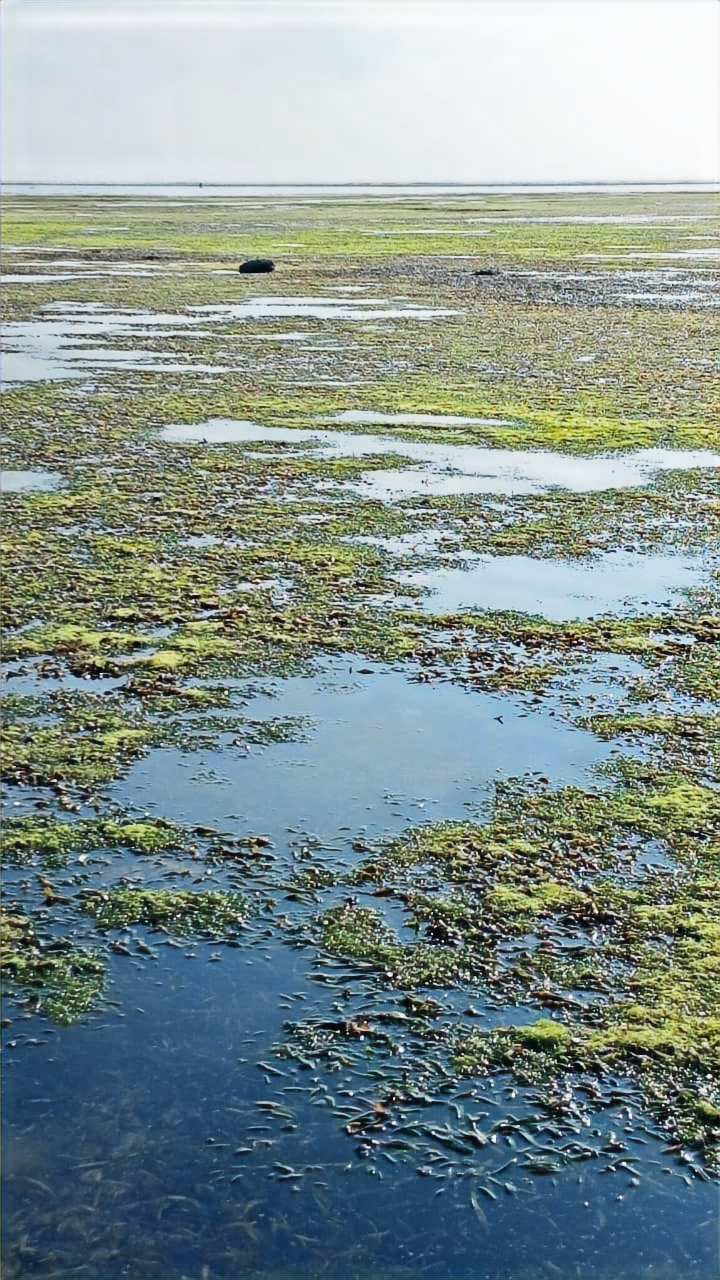
Puddles trapped on an exposed, mouldy seabed at low tide in Kilifi. Fishermen say these extreme retreats are becoming more common.
The extremely low-tide stretches, lasting longer and occurring more frequently, are raising alarm among fishers, beach operators, and climate scientists.
At the Kikambala Beach, fisherman Khamisi Ndenge, who has navigated these waters for 27 years, watches the horizon, worry written all over his face.
“The sea is running away from us, where we used to cast our nets; now it is only rock and seaweed. Some days we return home empty-handed.”
Khamisi Ndenge- fisherman
He points toward the exposed seabed, where pockets of murky puddles now gleam, where fish once teemed. Boats sit stranded for hours after sunrise, waiting for water deep enough to launch.


Early morning, and boats sit in the sweltering heat as the ocean waters recede at the Kikambala beach.
Hotel barriers signal a coastline under stress.
Hotels on the Kikambala beachfront are constructing stone and wooden barriers to prevent sand erosion and protect against increasingly unpredictable wave patterns. But these structures also disrupt natural sand movement.
“The beach is not the same. Hotels are building walls to protect themselves, but these walls change how the waves behave. Other parts of the beach erode faster now.”
Brian Mwangala-beach operator
What scientists say the receding shoreline reveals
Marine scientists warn that what coastal communities are witnessing is consistent with warming oceans, ecosystem collapse, and changing current patterns.
Dr David Obura, one of Africa’s leading coral-reef ecologists, says Western Indian Ocean coral reefs are approaching a critical threshold.
“Coral reefs are at the forefront of ocean heatwaves that we’re seeing. We are losing coral reefs rapidly… Once you lose those species and those genes, you never get them back.”
Dr David Obura, CORDIO East Africa (Source: The Founder Spirit)
Coral death reduces natural sand formation and weakens the buffer that protects coastlines, leaving the seabed exposed longer during low tides.
Wildlife Conservation Society (WCS) scientist Dr Timothy McClanahan, who has monitored Kenyan reefs for decades, also notes that local disturbances and warming seas have drastically reduced reef resilience.
His long-term studies highlight the combined strain of climate change, sedimentation, pollution, and overfishing.
“Corals are stenothermic organisms — they only survive within a narrow temperature range. Slight rise or decrease in temperatures will stress the coral and eventually cause its death.”
Dr Jelvas Mwaura, KMFRI(Source: People Daily)
Without healthy reefs, seaweed and algae overwhelm the shallow waters.

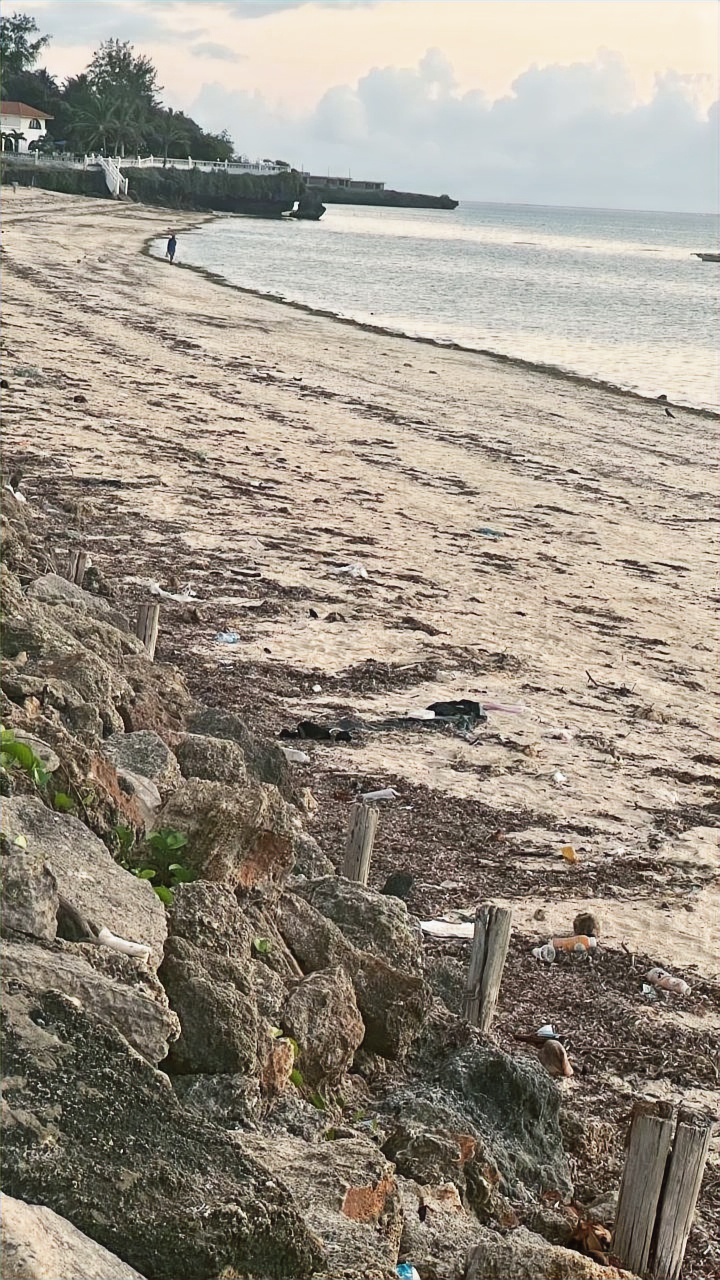
Gradual collapse of the coral reefs around the sun and sand beach resort in Kikambala
Communities are witnessing the ripple effects
Beach guide Said Kenga shares how visitors react to the exposed seabed:
“Tourists ask me if the ocean is sick when they see the mouldy rocks and brown seaweed. For us it is becoming normal.”
He fears that disappearing fish, unattractive beaches, and recurring extreme low tides may hurt tourism — the region’s main economic artery.
.
The coastline is facing combined climate and human pressures. The receding Indian Ocean is not just a tide — it is a signal.
What Can Be Done?
Experts are now calling for urgent interventions to safeguard Kenya’s fragile coastline. They say enhanced reef restoration and consistent monitoring will be essential in stabilising marine habitats already strained by warming oceans and rising sea levels.
Beyond conservation, scientists are pushing for tighter regulation of sand mining and stricter controls on hotel developments along the shoreline, warning that unplanned construction continues to weaken natural coastal defences.
They also emphasise the need to strengthen the country’s marine protected areas to improve biodiversity recovery.
Tourism stakeholders have been advised to adopt climate-resilient practices, noting that the sustainability of Kenya’s beach destinations will depend on how well the sector adapts to shifting ocean conditions.
At the same time, authorities are being encouraged to support artisanal fishing communities with modern, adaptive gear and training to help them cope with rapidly changing marine ecosystems.
Dr David Obura cautions that the coming decade will be decisive for the survival of Eastern Africa’s marine environment, stressing that the region cannot afford to delay action.
WHAT SCIENCE SAYS ABOUT THE PHENOMENON |
Research documents seasonal and non-astronomical tidal anomalies along the Kenyan Coast, and unusually large shallow water tide modulations. https://www.sciencedirect.com/science/article/abs/pii/S0272771422004619 |
Scientific evidence on tidal variability at Lamu-Estuarine, Coastal and Shelf Science https://www.researchgate.net/publication/366609732- Anomously large seasonal modulations of shallow water tides at Lamu, Kenya |
WHAT COMMUNITIES ARE DOING |
Kenya Marine and Fisheries Institute KMFRI & Beach Management Units carry out tide awareness and informal monitoring. |
Seaweed cooperatives: diversification of livelihood with over 100 households engaged in seaweed farming https://www.bizcommunity.com/article/seaweed-farming-transforms-kenyan-coast-amid-climate-challenges-477379a |
WhatsApp early warning groups: real-time tide and hazard alerts https://www.facebook.com/KenyaMeteorologicalDepartment/posts/follow-kmds-whatsapp-channel-for-a-reliable-source-of-professional-climate-infor/683183503995298/ |
Local coral rehabilitation efforts in select reef areas https://news.mongbay.com/2023/08/all-will-be-well-qa-with-kenyan-fisher-turned-coral-gardener-katana-ngala/ |
MEASURABLE OUTCOMES |
Community-led coral rehabilitation at Kuruwitu has increased fish biomass, restored coral cover, and created alternative livelihoods such as eco-guiding and reef monitoring. https://www.coralguardian.org/en/indian-ocean-kenya/ |
WhatsApp-based early warning groups among fishers, beach management units, and tourism operators enable real-time sharing of tide and hazard alerts, improving safety. |
Faster reaction and reduced loss during extreme weather events. |


Comments