_150x.png)
Beyond Containers: Climate, Health and the Rise of a Smart Port in Mombasa
- Dec 17, 2025
- 3 min read
Updated: Dec 18, 2025
By Moraa Nyangorora
The scale of Kenya's maritime gateway at the port of Mombasa is impressive.
Container stacks form, like steel skylines, cranes move with practised precision, vessels berth steadily as cargo is offloaded from sea to shore.


A cargo vessel docks at the Port of Mombasa with containers
Beyond the visible choreography of trade lies a quieter, more consequential story: how port operations link with climate change, public health and the well-being of surrounding communities.


Wide-angle view of the Port of Mombasa and the surrounding coastline
A tour of the Kenya Ports Authority reveals a port at the crossroads of efficiency and responsibility.

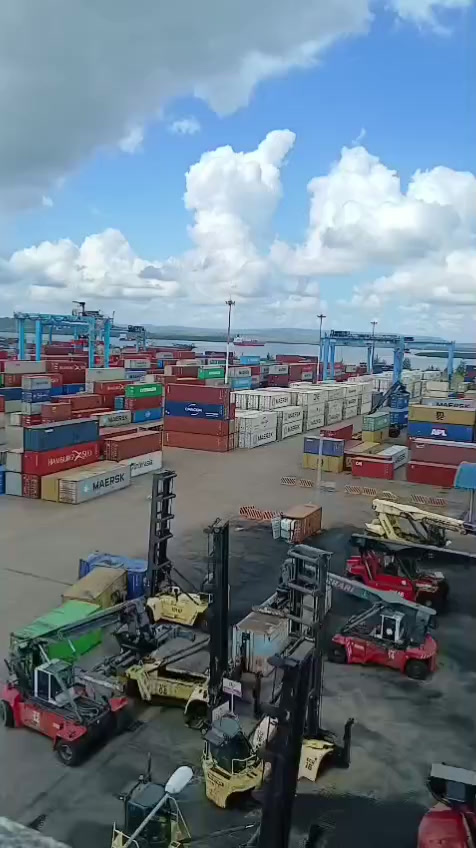
Video capturing activities at the port of Mombasa
PORT AND CLIMATE CHANGE
The Kenya Ports Authority KPA green port policy and strategic plan addresses the pertinent issue of climate change that is triggering a rise in sea levels, stronger storms, surges and heavy rainfall, now synonymous with coastal ports around the world, affecting port operations.
KPA's Managing Director, William Ruto, stated during a recent tour to the Kenya Editors Guild that a necessary shift in planning and operations is required.
"The future of the Port of Mombasa depends not only on how fast cargo moves, but on how responsibly we manage our environmental footprint and how deliberately we protect the health and livelihoods of the communities that host this port"
The port, through its strategic plan, emphasises shoreline protection, ecosystem conservation and climate adaptation alongside capacity expansion.
KPA's general manager of Engineering Services, Julius Tai, who spoke on behalf of the Managing Director, said the most significant shift is the adoption of a digital platform.
The rollout of a Port Community System (PCS) links Shipping lines, customs, logistics providers, and regulators, transforming how cargo moves through the port.


Graphics displaying how digitalisation of cargo handling is enhancing efficiency at Mombasa Port
This, he says, creates a connected and transparent ecosystem that seeks to align trade facilitation with environmental and social safeguards.
The port is a hub of movement, which increases exposure; diesel-powered ships, trucks and cargo handling equipment contribute to air pollution, while run off and waste management practices affect water quality.
The environmental pressures raise concerns about public health for dockworkers, seafarers and locals living around the port areas.
Although the smart port system may be perceived as a tool for competitiveness, its social value is just as crucial.
Faster clearance reduces congestion, cuts fuel consumption from idling vehicles and minimises spillover of heavy traffic into residential areas.


The images from the tour- ships at berth, containers in motion, cranes sihoutted against the sky- tell a story of trade.
However, at integrity, we see the fuller narrative being about choices.
Choices about how infrastructure adapts to climate risk, how economic growth protects public health and how modernisation must include community voices.
Miles away, successful digitalisation of port activities is supporting faster data exchange between shipping lines, terminals and regulators, cutting turnaround times and lowering carbon emissions.
In Singapore's port, the integration of digital and smart cargo handling systems is part of its broader sustainability strategy. It has streamlined vessel scheduling and cargo clearance to improve efficiency through its digital platform, DigitalPort@SG.
Ports should not just be gateways for goods, but anchors of resilience for coastal cities- ensuring that as the port grows smarter, it also grows greener and healthier for all who live and work around it.


Comments